
Last Updated: May 2026
If you’re building or buying a PC on a budget, you’ve probably come across the term APU and wondered how it differs from a standard CPU. In 2026 this question is more relevant than ever — AMD’s latest APUs deliver genuine 1080p gaming performance without a dedicated GPU, which changes the budget PC building equation significantly. This guide explains exactly what an APU is, how it compares to a traditional CPU, and which is the right choice for your situation.
What is a CPU?
A CPU (Central Processing Unit) is the main processor in your computer. It handles all general computing tasks — running applications, processing data, managing the operating system. Modern gaming CPUs like the Intel Core i5-14400F and AMD Ryzen 5 9600X have multiple cores and threads optimized for both single-threaded tasks (where gaming performance is most sensitive) and multi-threaded workloads like streaming and content creation.
A standard CPU does not include a graphics processor capable of gaming. To game on a standard CPU you need a separate dedicated GPU (graphics card) installed in your system.
What is an APU?
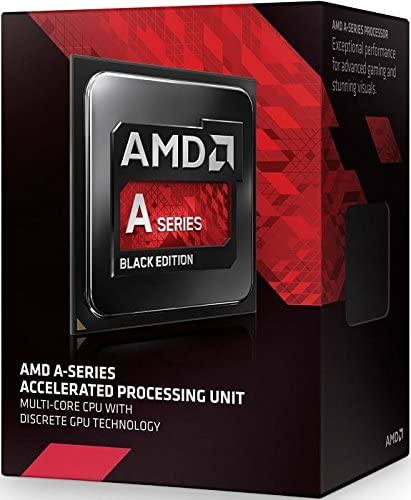
An APU (Accelerated Processing Unit) is AMD’s term for a processor that combines a CPU and a capable integrated GPU on a single chip. Intel produces CPUs with integrated graphics too, but AMD’s APUs use a significantly more powerful integrated GPU — built on AMD’s RDNA graphics architecture rather than the basic integrated graphics found in most Intel CPUs.
The key distinction: AMD APUs are specifically designed to deliver meaningful gaming performance without a dedicated GPU. Intel CPUs with integrated graphics are designed primarily for display output and light tasks, not gaming.
The current flagship desktop APU is the AMD Ryzen 7 8700G, which combines 8 Zen 4 CPU cores with Radeon 780M graphics based on RDNA 3 architecture.
How Do APUs Perform for Gaming in 2026?
This is where APUs have made dramatic progress. In 2026 AMD’s Ryzen 8000G series APUs can deliver genuinely playable gaming performance at 1080p:
Esports titles (Valorant, CS2, League of Legends) — 90–120+ FPS at 1080p medium settings. These titles are well within APU territory.
Casual and older games — smooth 60+ FPS performance at 1080p medium to high settings in a wide range of titles.
Demanding AAA games (Cyberpunk 2077, Hogwarts Legacy) — approximately 40–50 FPS at 1080p medium settings with AMD’s FSR upscaling enabled. Playable but not ideal.
One critical factor for APU gaming performance: RAM speed. APUs share system RAM as VRAM, so faster memory (DDR5-6000+ in dual channel) directly improves gaming performance — often by 15–25% compared to slower RAM. If you build an APU system, don’t cheap out on RAM speed.
APU vs CPU — Which Should You Choose?
Choose an APU if:
You’re building a budget gaming PC and can’t afford a dedicated GPU right now. An APU gets you gaming immediately and leaves the PCIe slot open for a dedicated GPU later when budget allows. This is the classic APU use case — start gaming today, add a GPU in 6–12 months for a major performance jump.
You want the smallest, most power-efficient gaming system possible. APUs are popular in mini-ITX builds and small form factor PCs where dedicated GPU space is limited.
You play primarily esports titles and don’t need ultra settings in demanding AAA games.
Choose a CPU + dedicated GPU if:
You want to play demanding AAA games at high to ultra settings. No current APU can match a dedicated mid-range GPU like the RX 9060 XT or RTX 5060 for modern gaming performance.
You’re building a mid-range or above gaming PC. At budgets of $600+ a CPU paired with a dedicated GPU delivers significantly better gaming performance than an APU at the same price.
You stream or create content alongside gaming — dedicated GPU handles encoding and graphics simultaneously without the shared memory constraints of an APU.
A Practical Budget Comparison
| Build Type | Example Components | Gaming Performance | Budget |
|---|---|---|---|
| APU only | Ryzen 5 8600G + 32GB DDR5-6000 | 1080p esports, playable AAA | ~$400–500 |
| APU + budget GPU (later) | Add RX 7600 (~$200) | 1080p high-ultra, 100+ FPS | ~$600–700 |
| CPU + dedicated GPU | Ryzen 5 9600X + RX 9060 XT | 1080p ultra, 1440p capable | ~$700–900 |
The APU path makes the most sense as a starting point with a clear upgrade path — not as a permanent solution for serious gaming.
What About AMD’s Upgrade Path?
One underrated advantage of building on AM5 with an APU is the upgrade path. The AM5 socket is supported through at least 2027, meaning you can start with a Ryzen 7 8700G APU today and later swap in a more powerful Ryzen 9000 series CPU while adding a dedicated GPU — all without changing your motherboard or RAM.
Frequently Asked Questions
Can you add a dedicated GPU to an APU system?
Yes — this is actually the recommended strategy for budget builders. Start with an APU, game on the integrated graphics, and add a dedicated GPU when budget allows. The APU’s integrated graphics will automatically step aside when a dedicated GPU is installed.
Is an AMD APU better than an Intel CPU with integrated graphics for gaming?
Yes, significantly. AMD’s RDNA 3 integrated graphics in the Ryzen 8000G series are dramatically more powerful than Intel’s UHD graphics. For gaming without a dedicated GPU, AMD APUs are the clear choice.
What RAM speed is best for APU gaming?
DDR5-6000 in dual channel is the sweet spot for AMD Ryzen 8000G APUs. Faster RAM directly improves gaming performance since the integrated GPU uses system RAM as VRAM. Don’t run single-channel RAM on an APU build — it cuts performance significantly.
Is an APU good for a laptop?
Most gaming laptops actually use an APU (CPU + integrated graphics) alongside a dedicated GPU — the APU handles general tasks while the dedicated GPU handles gaming. In this context APU vs CPU is less relevant for laptop buyers.
Do you use an APU based system for gaming? If so, let us know what you think of its performance in the comments!